
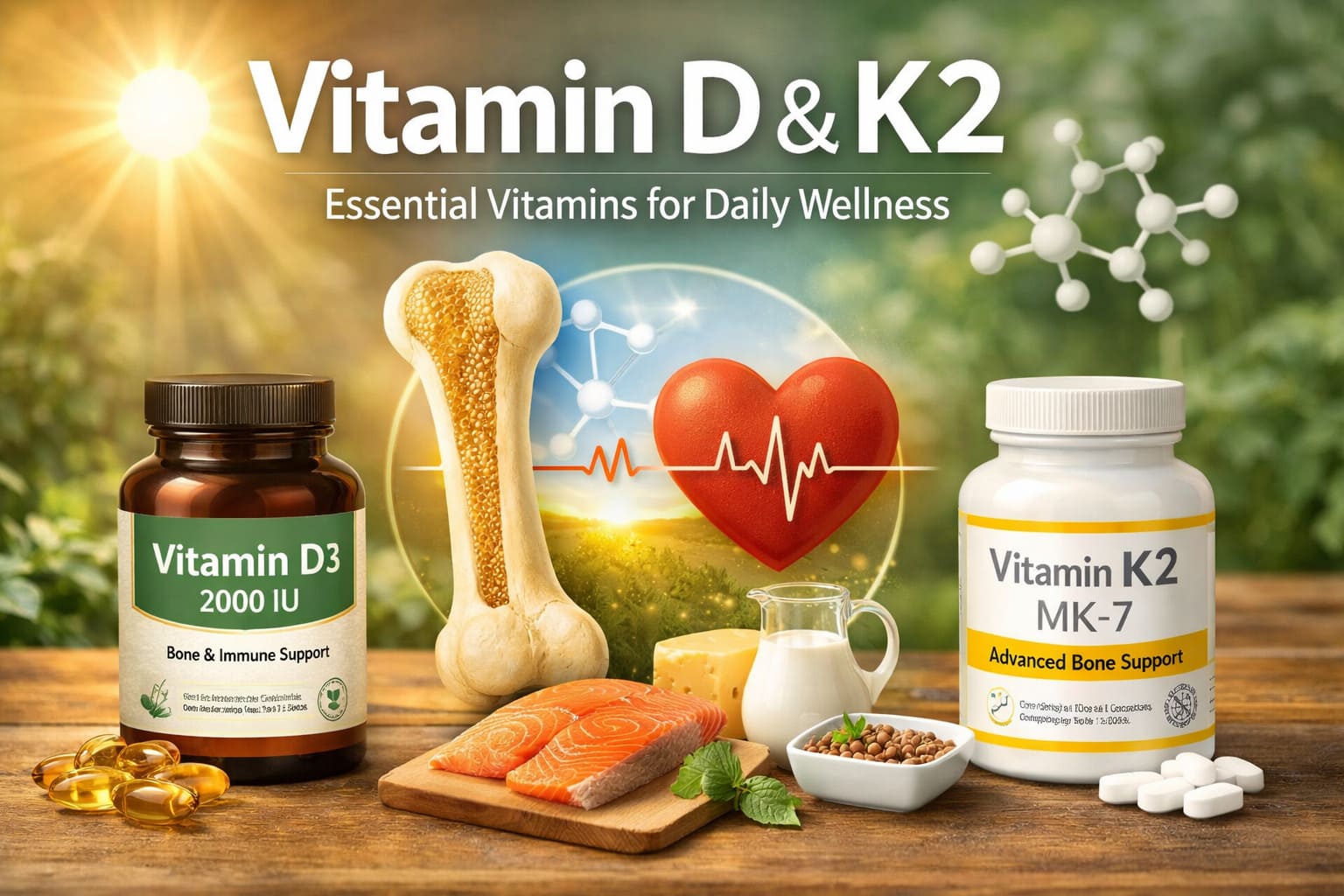
Vitamin D3 & K2: What They Are and How They Fit Into a Daily Wellness Routine
Written and reviewed by the Herbal-Boutique editorial team. We are a UAE retailer, not a medical provider — see our editorial policy and medical disclaimer.
Short answer: vitamin D3 helps your body absorb calcium, and vitamin K2 helps direct that calcium into bone rather than soft tissue. That is why they are sold together. K2 is not required by everyone, and anyone taking blood-thinning medication should not add it without medical supervision.
Which VitaStrong vitamin D product suits you?
| Product | What it is | Best if | Price |
|---|---|---|---|
| Vitamin D3 + K2 2000 IU, 365 capsules | Both nutrients in one capsule, made in Italy | You want one capsule a day and no decisions | |
| Vitamin D3 2000 IU, 450 tablets | D3 only, largest count in the range | You have been advised to take D3 but not K2 | |
| Vitamin K2, 450 tablets | K2 only | You already take a D3 product and want to add K2 separately |
All three are VitaStrong products manufactured in Italy. The full range, including where the batch code is printed, is listed in our guide to VitaStrong Italy in the UAE.
When you start looking into supplements, it can quickly become confusing.
You might see terms like vitamin D3 with K2, MK-7, fat-soluble vitamins, or 2000 IU daily. Some sources suggest everyone needs them. Others say only certain people do. It’s normal to feel unsure about what’s accurate, what’s necessary, and what might simply be marketing.
This guide is designed to bring clarity — not pressure.
We’ll explain what vitamin D and K2 are, how they function in the body, why they’re often discussed together, and how to approach supplementation thoughtfully in the UAE context.
This is educational guidance to support informed decisions. Individual needs vary, and personal medical advice should always come from your healthcare professional.
What Is Vitamin D3?
Vitamin D is a fat-soluble vitamin that plays a role in several body systems. The most commonly used supplemental form is vitamin D3 (cholecalciferol).
How Vitamin D Works in the Body
According to the World Health Organization (WHO) and the National Institutes of Health (NIH), vitamin D contributes to:
-
Calcium absorption
-
Bone and muscle function
-
Immune system regulation
In practice, vitamin D acts more like a hormone precursor than a typical vitamin. Once activated in the liver and kidneys, it helps regulate calcium balance, which is essential for maintaining bone structure and normal muscle activity.
Why Vitamin D Matters in the UAE
Despite abundant sunlight in the region, vitamin D insufficiency is commonly observed across the Gulf. Factors that may contribute include:
-
Indoor lifestyles
-
Sun protection habits
-
Cultural clothing practices
-
Limited direct midday sun exposure
Health authorities in multiple countries, including regional medical bodies in the GCC, recognize vitamin D insufficiency as relatively common.
That does not automatically mean everyone requires supplementation — but it explains why many adults discuss vitamin D3 supplements in Dubai and across the UAE.
If you are exploring options, you may encounter standalone products such as Vitamin D3 2000 IU, often used for general maintenance under professional guidance.
What Is Vitamin K2?
Vitamin K is another fat-soluble vitamin. It exists in different forms, primarily:
-
Vitamin K1 (phylloquinone) – Found in leafy greens
-
Vitamin K2 (menaquinone) – Found in fermented foods and animal products
Vitamin K2 itself has subtypes, commonly MK-4 and MK-7.
Vitamin K2 MK-7 vs MK-4
| Feature | MK-4 | MK-7 |
|---|---|---|
| Source | Animal products | Fermented foods |
| Half-life in body | Shorter | Longer |
| Supplement use | Less common | More common in daily supplements |
In real-world retail settings, MK-7 is more frequently used in combination supplements because of its longer activity in the bloodstream.
According to established nutrition references, vitamin K contributes to:
-
Normal blood clotting
-
Supporting bone protein activation
It is important to note that individuals on blood-thinning medications should only consider vitamin K supplements under direct medical supervision.
Why Vitamin D and K2 Are Often Discussed Together
You may have seen products labeled “vitamin D3 and K2 supplement” or “vitamin D3 with K2 UAE.”
The reason they’re often paired is functional — not promotional.
Vitamin D helps increase calcium absorption from the gut. Vitamin K2 is involved in activating certain proteins that help guide calcium into bones and teeth.
Some practitioners discuss their complementary roles in bone metabolism. However:
-
Major public health authorities recommend vitamin D based on established deficiency data.
-
Vitamin K2 supplementation is more individualized and not universally required.
In practice, combined supplements are commonly observed among individuals seeking a simplified daily routine.
Can you take vitamin D and K2 together?
For many healthy adults, they are often used together. However, suitability depends on medical history, medications, and dietary intake.
How These Vitamins Are Naturally Obtained
Before considering supplements, it helps to understand natural sources.
Vitamin D Sources
-
Sunlight exposure
-
Fatty fish (salmon, sardines)
-
Fortified dairy or plant milks
Vitamin K2 Sources
-
Fermented foods (such as natto)
-
Certain cheeses
-
Egg yolks
In real-world dietary patterns in the UAE, consistent intake of K2-rich fermented foods is relatively uncommon. Sun exposure varies widely depending on lifestyle.
Supplements are generally considered when dietary intake or sun exposure may be insufficient.
Who May Consider Vitamin D or K2 Supplements?
Supplementation decisions should ideally be based on:
-
Blood test results
-
Physician recommendation
-
Individual lifestyle factors
Commonly observed groups who discuss vitamin D supplementation include:
-
Adults with limited sun exposure
-
Office-based professionals
-
Individuals with darker skin tones
-
Older adults
According to many regional clinical guidelines, daily vitamin D intake commonly ranges between 600 and 2000 IU for adults, depending on needs and physician guidance. Higher doses should only be taken under supervision.
Vitamin K2 supplementation is more situational and not universally indicated.
Forms Available (Capsules, Softgels, Drops)
If considering a supplement, forms may include:
-
Capsules
-
Softgels
-
Liquid drops
Vitamin D capsule or drops — which is better?
Both forms can be effective. Drops may allow flexible dosing, while capsules offer convenience. Choice often depends on personal preference and absorption comfort.
Combined products (D3 + K2) are also available, especially for individuals seeking simplified routines. You may also find these within broader multivitamin formulations, depending on composition.
Usage Awareness & General Safety Notes
⚠️ Important Safety Reminder
This information is educational and not a substitute for medical advice. Individuals with medical conditions, pregnancy, kidney disorders, or those taking anticoagulant medications should consult a healthcare professional before starting supplements.
Additional considerations:
-
Vitamin D is fat-soluble — excessive intake over time may lead to an imbalance.
-
Vitamin K can interfere with certain blood-thinning medications.
-
More is not necessarily better.
According to international nutrition authorities, supplementation should match need, not marketing trends.
How to Choose Vitamin D or K2 Supplements in the UAE
If purchasing locally, consider:
✔ Before You Buy Checklist
-
Clear labeling of dosage (e.g., 1000 IU, 2000 IU)
-
Ingredient transparency
-
Identified form (D3, MK-7, etc.)
-
Country of origin
-
Expiry date
-
Storage guidance suitable for the UAE climate
Retailers that focus on transparent curation rather than medical claims are generally more aligned with responsible supplement practices.
If exploring options, some stores in Dubai provide standalone Vitamin D3 and separate Vitamin K2 products to allow flexible routines.
Realistic Expectations From Supplementation
It’s important to set balanced expectations.
Vitamin D and K2 are not instant-effect products. They support physiological processes over time. Benefits, when relevant, are typically gradual and often measurable through lab markers rather than immediate sensations.
In real-world settings, people sometimes expect noticeable changes within days. That’s rarely how nutrient correction works.
Consistency matters more than intensity. Routine matters more than dosage extremes.
Progress, when appropriate, is usually steady and subtle.
Frequently Asked Questions
Can I take vitamin D and K2 together?
They are often used together in combined supplements. Suitability depends on your health profile and medication use.
When should I take vitamin D?
Many people take it with a meal containing fat to support absorption. Timing consistency is generally more important than time of day.
What is the difference between vitamin D and K2?
Vitamin D helps regulate calcium absorption. Vitamin K2 helps activate certain proteins involved in calcium utilization and blood clotting.
Final Perspective
If you’re exploring vitamin D and K2 explained because you want to support general wellness, you’re not alone. Many adults in the UAE are reassessing daily routines and looking for sustainable habits.
Supplements are tools — not solutions on their own.
Sun exposure, balanced nutrition, sleep, and consistent medical follow-ups remain foundational.
Progress in wellness is rarely dramatic. It’s usually quiet, steady, and personal.
Take your time. Ask informed questions. Choose routines that feel manageable — not overwhelming.

 WhatsApp us
Clear and practical breakdown of how D3 and K2 work together—especially relevant for those in the UAE where indoor lifestyles can still lead to low vitamin D levels. Simple, actionable wellness advice.