
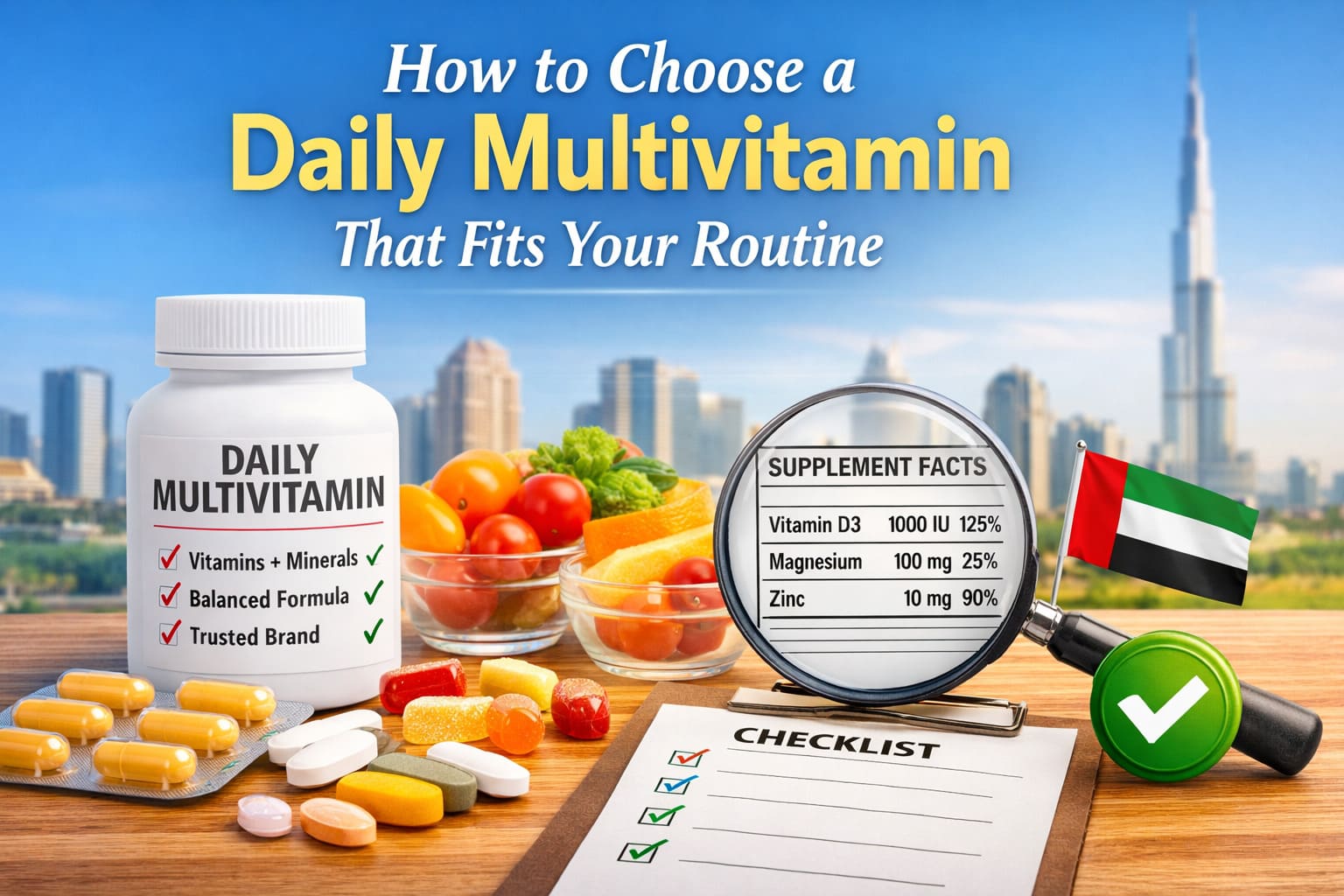
How to Choose a Daily Multivitamin That Fits Your Routine
Choosing a multivitamin can feel strangely overwhelming.
You walk into a store—or browse online—and suddenly there are dozens of options. Some promise energy. Others focus on immunity. Some are “for men,” others “for women,” and many include long ingredient lists that look more like chemistry textbooks than wellness tools.
If you’ve ever thought:
- “Do I really need one?”
- “Is this brand better than that one?”
- “Am I paying for marketing?”
You’re not alone.
In real-world retail settings, most adults aren’t looking for something extreme. They simply want a reliable daily supplement that fits their routine, feels sensible, and supports general nutritional balance—without hype or confusion.
This guide will walk you through how to choose a multivitamin thoughtfully, especially if you’re searching for the best multivitamin UAE residents can confidently use as part of a normal daily routine.
Why Do People Consider Multivitamins?
Before choosing one, it helps to understand why people take them in the first place.
According to public guidance from organizations such as the World Health Organization (WHO) and the U.S. National Institutes of Health (NIH), vitamins and minerals play essential roles in:
- Normal immune function
- Energy metabolism
- Bone health
- Muscle and nerve function
- Skin and tissue maintenance
In practice, multivitamins are commonly used when:
- Diet variety is inconsistent
- Busy schedules limit meal planning
- Sun exposure is low (relevant in indoor lifestyles, even in Dubai)
- Individuals want nutritional “insurance” for general wellness
It’s important to set realistic expectations early:
A multivitamin is not a replacement for a balanced diet, and it is not designed to treat medical conditions. It is typically used as supportive daily nutrition.
Understanding Supplement Labels
One of the most important skills when learning how to choose a multivitamin is reading the label calmly and clearly.
What to Look For
-
Serving Size
-
Is it 1 capsule per day or 2–3 tablets?
-
Will this realistically fit into your routine?
-
-
Percentage of Daily Value (%DV)
-
These are based on general dietary reference values.
-
Extremely high percentages (e.g., 500%+) are not always better.
-
-
Core Nutrients Typically Included
- Vitamin A
- Vitamin C
- Vitamin D
- B-complex vitamins
- Zinc
- Magnesium
If you want to understand specific nutrients in more detail, you may find it helpful to review dedicated pages such as:
These individual nutrients often appear inside multivitamin capsules UAE retailers offer.
Example: How to Break Down a Label
Let’s say a label lists:
| Nutrient | Amount | % Daily Value |
|---|---|---|
| Vitamin D3 | 1000 IU | 125% |
| Vitamin C | 80 mg | 100% |
| Magnesium | 100 mg | 25% |
| Zinc | 10 mg | 90% |
What does this mean?
- Vitamin D is above the baseline daily value (common in regions with indoor lifestyles).
- Vitamin C is around the standard daily intake.
- Magnesium is present, but not at the full daily value (many multivitamins only provide partial amounts).
- Zinc is close to the recommended intake.
In practice, multivitamins often provide moderate coverage rather than full therapeutic doses of every nutrient.
Comparing Capsule, Tablet, and Gummy Formats
Many people search for:
- capsule vs tablet multivitamin
- multivitamin capsules UAE
- Daily multivitamin Dubai
The format can affect comfort and consistency more than effectiveness.
Capsules
Pros
- Often easier to swallow
- Fewer binders or fillers
- Dissolve relatively smoothly
Commonly preferred for adults in the UAE supplement stores
Tablets
Pros
- Widely available
- Often cost-effective
- Stable shelf life
Cons
-
May feel harder to swallow for some individuals
Gummies
Pros
- Pleasant taste
- Easy to take
Considerations
- Often contain added sugars
- May provide lower nutrient amounts
- Sometimes, missing minerals like iron or magnesium
In real-world retail settings, adults seeking long-term consistency usually choose capsules or tablets over gummies.
Ingredient Transparency Checklist
When evaluating the best multivitamin UAE options, use this neutral checklist:
✔ Clear Ingredient List
Every nutrient should be clearly listed with its amount.
✔ No Exaggerated Claims
Avoid packaging that promises dramatic outcomes.
✔ Recognizable Nutrients
Core vitamins and minerals should align with established dietary references.
✔ Brand Transparency
-
Is the manufacturer named?
-
Is the country of origin stated?
For example, established European brands such as those found in curated selections like Vitastrong Multivitamin often disclose formulation details clearly.
Transparency builds trust more than marketing language.
Imported vs Local Brands
In Dubai and across the UAE, you’ll typically find:
- European imports
- U.S.-origin supplements
- Regionally distributed brands
There is no automatic superiority between “imported” and “local.”
What matters more:
- Regulatory compliance
- Clear labeling
- Storage conditions
-
Retail handling standards
In practice, many UAE customers prefer internationally established brands, but credibility depends more on transparency than on the country alone.
Dosage Awareness: More Is Not Always Better
According to the NIH Office of Dietary Supplements, exceeding upper intake levels of certain vitamins (such as Vitamin A or Iron) may not be advisable without professional guidance.
When choosing a daily multivitamin:
- Look for balanced doses close to 100% daily value.
- Avoid extremely high megadoses unless recommended by a qualified professional.
- Consider whether you already supplement specific nutrients separately (e.g., Vitamin D page).
If you’re already taking individual supplements like magnesium or zinc, you may not need very high amounts inside your multivitamin.
Safety Considerations
While multivitamins are generally well tolerated when used as directed, certain individuals should exercise additional caution:
- Pregnant or breastfeeding individuals
- People with chronic medical conditions
- Individuals taking prescription medications
- Those with known nutrient sensitivities
Public health bodies consistently advise speaking with a licensed healthcare professional before starting supplementation if you fall into these categories.
In real-world pharmacy settings, this step is often overlooked—but it supports long-term safety.
🧾 Quick Decision Checklist
If you’re feeling overwhelmed, simplify the process:
Ask yourself:
- Does this multivitamin match my age and general needs?
- Are nutrient levels balanced—not extreme?
- Is the brand transparent about ingredients?
- Can I realistically take this daily?
- Am I already supplementing some of these nutrients separately?
If the answer is “yes” to most of these, you likely have a reasonable option.
Final Buyer Checklist
Before purchasing any multivitamin supplement:
-
✔ Check serving size and routine compatibility
-
✔ Confirm ingredient transparency
-
✔ Avoid exaggerated outcome claims
-
✔ Compare capsule vs tablet based on comfort
-
✔ Consider whether individual nutrients (like Vitamin D or Magnesium) might be taken separately
-
✔ Ensure you are buying from a retailer with clear policies
A Balanced Perspective on Daily Multivitamins
A daily multivitamin is not a shortcut. It is not a replacement for sleep, balanced meals, or movement.
In practice, it works best as part of a consistent routine:
- Regular meals
- Hydration
- Moderate activity
- Sensible supplementation
Progress in wellness is rarely dramatic. It’s steady, quiet, and built from repeatable habits.
If you choose a multivitamin, choose one that fits your routine—not one that promises transformation.
Published by Hassan Shroff
Digital Marketing & Wellness Content Strategist
3+ years of experience in educational content and e-commerce trust frameworks
Written and reviewed by the Herbal-Boutique editorial team. We are a UAE retailer, not a medical provider — see our editorial policy and medical disclaimer.
Short answer: judge a multivitamin by its label, not its marketing. Check the form of each nutrient, the dose against your daily requirement, and whether it duplicates something you already take. A multivitamin is a base layer — it is not the right tool for correcting a diagnosed deficiency.
What to compare on the label
| Check | Why it matters |
|---|---|
| Number of nutrients and their doses | A long list at token doses is weaker than a short list at useful ones |
| Form of each nutrient | D3 rather than D2, methylcobalamin or cyanocobalamin for B12, oxide vs bisglycinate for minerals |
| Overlap with what you already take | Doubling up on the same nutrient is the most common mistake |
| Capsule count and daily dose | Tells you the real cost per day, not the shelf price |
| Country of manufacture and expiry | Storage matters in UAE heat |
The VitaStrong Multivitamin, 90 capsules () is the one we stock against these criteria, made in Italy with the full nutrient table printed on the pack. See the wider range in VitaStrong Italy in the UAE.
5+ Years in Community & Preventive Health
Consultant in Family Medicine | 10+ Years Clinical Practice



 WhatsApp us