
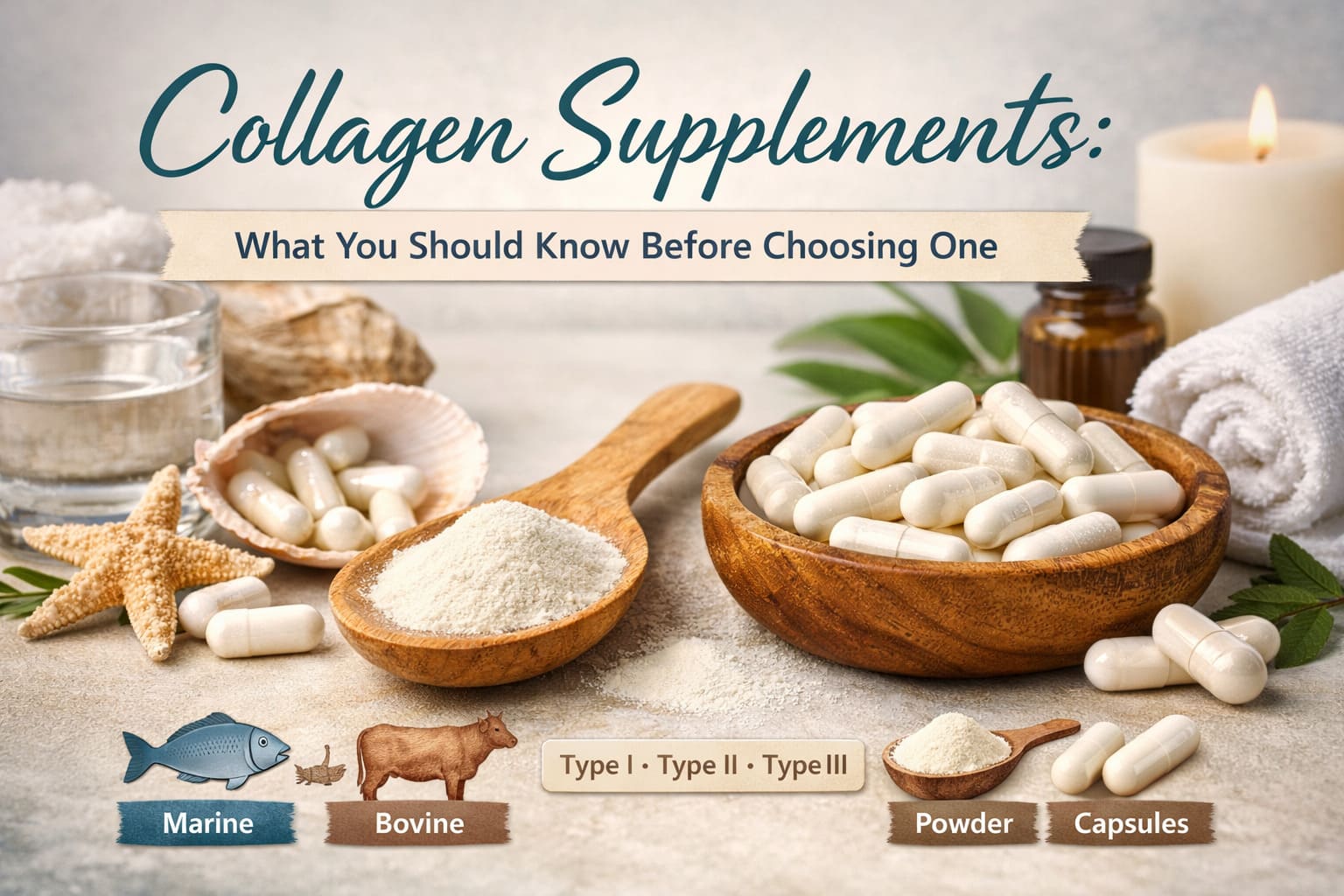
Collagen Supplements: What You Should Know Before Choosing One
Many people first hear about collagen through beauty conversations — glowing skin, stronger hair, joint comfort, or “anti-aging” routines. It often sounds simple: take a collagen supplement, and results will follow.
But in practice, the topic can feel confusing.
There are different types of collagen. Marine vs bovine options. Powder vs capsules. Beauty-focused products vs joint-focused formulas. And in places like the UAE and Dubai, options can vary widely in sourcing and labeling standards.
If you’ve felt unsure about how to choose collagen supplements — or whether you even need one — this guide is designed to help you understand the basics calmly and clearly.
This is not about hype. It’s about realistic, informed decisions.
Quick Navigation
- What Is Collagen?
- Natural Sources of Collagen
- Marine vs Bovine Collagen
- Understanding Collagen Types
- Powder vs Capsules
- How Collagen Fits Into a Routine
- General Safety & Usage Awareness
- Realistic Expectations
- Choosing Collagen in the UAE – Practical Checklist
What Is Collagen?
Collagen is the most abundant structural protein in the human body. It plays a role in:
- Skin structure
- Connective tissues
- Cartilage
- Tendons and ligaments
- Bones
According to the National Institutes of Health (NIH) and broader clinical nutrition literature, collagen production naturally decreases with age. This decline is gradual and varies between individuals.
In real-world settings, most people become curious about collagen in their late 20s to 40s — usually for skin elasticity or joint comfort.
A collagen supplement explained simply:
It provides hydrolyzed collagen peptides (broken-down proteins) that are easier to absorb and use as building blocks within the body.
It does not replace natural collagen entirely, and results vary depending on overall diet, health status, and consistency.
Natural Sources of Collagen
Before discussing supplements, it’s helpful to understand dietary sources.
Collagen itself is found in:
- Bone broth
- Animal skin
- Connective tissues (meat cuts with cartilage)
However, your body also makes collagen using:
- Vitamin C
- Zinc
- Copper
- Adequate protein intake
Public nutrition guidance from organizations such as the World Health Organization (WHO) and general dietary frameworks emphasize balanced protein and micronutrient intake as foundational.
In practice, supplements are often used when:
-
Diet lacks variety
-
Individuals prefer convenience
-
Lifestyle makes traditional collagen-rich cooking unrealistic
Supplements should support — not replace — overall nutrition.
Marine vs Bovine Collagen
This is one of the most common questions.
Marine Collagen
-
Sourced from fish skin or scales
-
Often rich in Type I collagen
-
Commonly chosen for skin-focused routines
Bovine Collagen
-
Sourced from cow hide or connective tissue
-
Contains Types I and III
-
Often used for broader structural support
Marine vs Bovine Collagen – Practical Considerations
| Factor | Marine Collagen | Bovine Collagen |
|---|---|---|
| Source | Fish | Cow |
| Common Focus | Skin | Skin + connective tissues |
| Allergy Concern | Not suitable for fish allergies | Avoid if sensitive to beef |
| Sustainability Concerns | Varies by brand | Varies by sourcing |
There is no universally “better” option. Choice often depends on:
-
Dietary preference
-
Allergy profile
-
Ethical sourcing values
In real-world supplement retail, marine collagen is frequently marketed for beauty routines, while bovine collagen appears in broader wellness formulas.
Understanding Collagen Types
You may see products labeled with specific types. Here’s a simplified explanation:
| Type | Where It’s Found in the Body | Often Associated With |
|---|---|---|
| Type I | Skin, bones, tendons | Skin firmness & structure |
| Type II | Cartilage | Joint support |
| Type III | Skin, blood vessels | Structural elasticity |
Type 1, 2, 3 collagen differences matter mostly for targeted support.
However, many hydrolyzed collagen supplements contain a blend. The body breaks collagen down into amino acids regardless of type.
In practice, marketing language often emphasizes specific types more than most general consumers need to worry about.
Powder vs Capsules
Another common confusion: collagen powder vs capsules.
Collagen Powder
-
Higher dose per serving
-
Mixes into drinks
-
Flexible serving size
Collagen Capsules
-
Pre-measured
-
Portable
-
No taste concerns
Capsules typically contain smaller amounts per capsule, meaning multiple capsules may be required daily.
Powder may suit people comfortable with smoothies or coffee additions. Capsules may suit structured routines or travel.
There is no evidence-based superiority of one format over the other. Consistency matters more than format.
How Collagen Fits Into a Routine
Collagen for daily wellness works best when treated as part of a broader lifestyle.
In practice, consistency over intensity tends to produce more realistic outcomes.
A balanced approach may include:
-
Adequate protein intake
-
Vitamin C from fruits or vegetables
-
Hydration
-
Regular movement
-
Optional collagen supplement
Small daily habits are more sustainable than short-term intensive use.
If you are already following a general supplement routine, you may also explore broader nutritional support (for example, see our Multivitamin Guide for general wellness context).
General Safety & Usage Awareness
Collagen supplements are generally considered safe for most healthy adults.
According to major public health bodies and clinical nutrition consensus:
-
They are classified as dietary supplements, not medications
-
They should not replace medical treatment
-
Individuals with allergies (fish or beef) should check sources carefully
Important considerations:
-
Always read ingredient lists
-
Check for added sugars, flavorings, or unnecessary fillers
-
If pregnant, breastfeeding, or managing medical conditions, consult a qualified healthcare professional
For detailed store-wide guidance on safe supplement use, see our Safety & Usage Information.
This content is educational and does not replace personalized medical advice.
Realistic Expectations
One of the biggest misunderstandings around collagen is expectation.
Collagen is not:
-
A rapid anti-aging solution
-
A guaranteed skin transformation
-
A replacement for medical joint care
Commonly observed among consistent users:
-
Gradual changes over several weeks
-
Subtle improvements rather than dramatic shifts
-
Best results when paired with overall wellness habits
Clinical research in dermatology and joint health suggests potential benefits over time, but results vary significantly between individuals.
Plateaus are normal. Slow progress is normal.
Routine matters more than perfection.
Choosing Collagen in the UAE – Practical Checklist
If you’re exploring collagen capsules UAE or collagen supplement Dubai options, consider this simple checklist:
✔ Label Transparency
-
Clear ingredient list
-
Source stated (marine or bovine)
-
Serving size visible
✔ Local Compliance
-
Proper import and retail labeling
-
Avoid exaggerated or medical-style claims
✔ Format Preference
-
Powder or capsules based on routine
✔ Realistic Claims
-
Avoid “instant” or “guaranteed” promises
✔ Reputable Retailer
-
Clear contact information
-
Transparent shipping policy
-
Visible safety information
If browsing online, choose collagen supplement options in UAE that prioritize educational information over aggressive marketing.
You can explore our curated collagen collection here:
👉 View Collagen Products
(Products are optional support tools — not essential solutions.)
A Calm, Long-Term Perspective
Collagen supplements sit at the intersection of beauty and wellness. That makes them appealing — but also easy to misunderstand.
The most helpful mindset is this:
-
Collagen supports a lifestyle.
-
It does not replace one.
-
Progress is gradual and individual.
If you decide to include collagen in your daily wellness routine, think in months, not days. Focus on consistency, balanced nutrition, and sustainable habits.
Published by Hassan Shroff
Digital Marketing & Wellness Content Strategist
3+ years of experience in educational content and e-commerce trust frameworks
Author: Ramzi Issa
5+ Years in Community & Preventive Health
Reviewed by: Dr. Aman Rehmani, MD
Consultant in Family Medicine | 10+ Years Clinical Practice


 WhatsApp us
Heard great things about okgran and decided to give it a shot. Not disappointed! Go see okgran and see what all the hype is about.